When it was Simple

Some legacies are not written in money or land deeds. Some are written in calloused hands and well water.
His home was an old log cabin with makeshift siding and a metal roof nailed over its bones. Four rooms. No indoor plumbing. No electricity.
Heat came from a stove in the living room. Air conditioning meant opening the windows and trusting the breeze to find you.
The outhouse sat a distance from the house, and getting to it meant trudging through snow, rain, or thick Missouri mud that clung to your boots and refused to let go. In the middle of the night there might be snakes stretched across the ground, sometimes curled inside. You learned to carry a lantern. You learned not to panic. You learned to move carefully in the dark.
Water required arm strength. You pumped it from the well, the handle groaning with every pull. Beside the pump sat glasses and old jars waiting to be filled.
The washtub hung inside the house and would be brought into the kitchen when it was time to bathe. Water was heated on the old wood-burning stove, the same stove used for coffee and for cooking meals that were entirely homemade, often meat from animals my great uncle had raised or hunted and butchered himself. Nothing went to waste. Nothing was taken for granted.
Garden food was canned or dried. Meat was cured. Chickens were fed daily, and the henhouse checked for eggs like clockwork. Even items like peanut butter were made at home and put in jars. Life followed seasons, not schedules.
If you wanted a soda, you went into town. Maybe you walked. Maybe the old truck would start. Sometimes you rode in on the tractor, an old red Farmall Cub I nicknamed Baby Bear. That tractor planted in me a lifelong love of red machines, their steady hum sounding like devotion to the soil.
Winter was harsh on the farm. My great uncle, a bachelor, would spend time at my grandmother’s house during blizzards and cold snaps. She felt better knowing her brother was not alone when the wind pressed hard against the fields.
In the summer he would stay with her for a few weeks, seeking relief from a house with no electricity, no air conditioning, no comfort beyond shade trees and trips to the ice house.
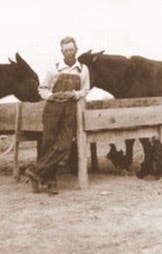
If the tractor would not run, he farmed with a mule team.
His day began before the sun came up and he didn’t have time to complain about the setbacks. Days ended when it was too dark to do anything but seek comfort inside.
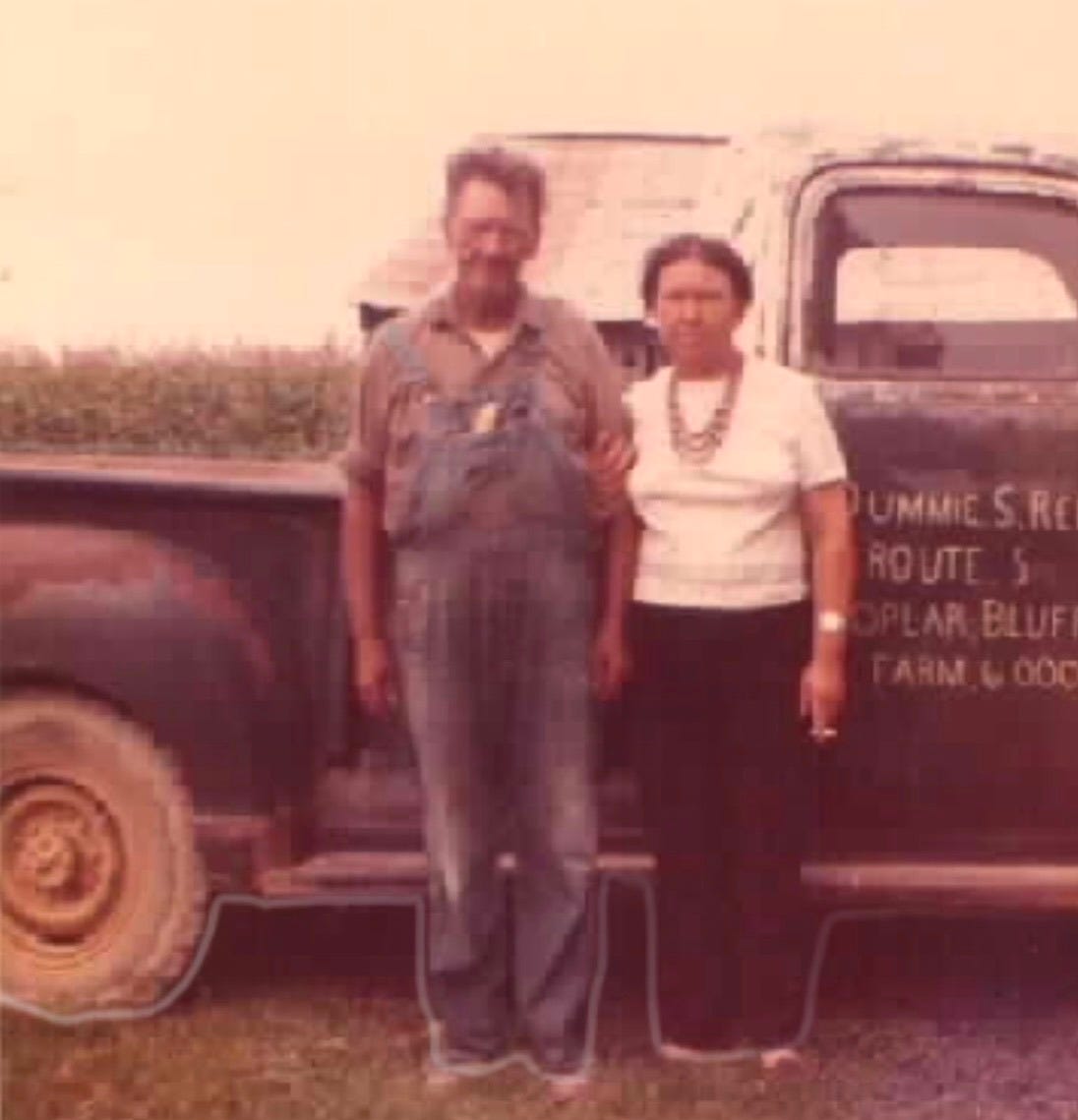
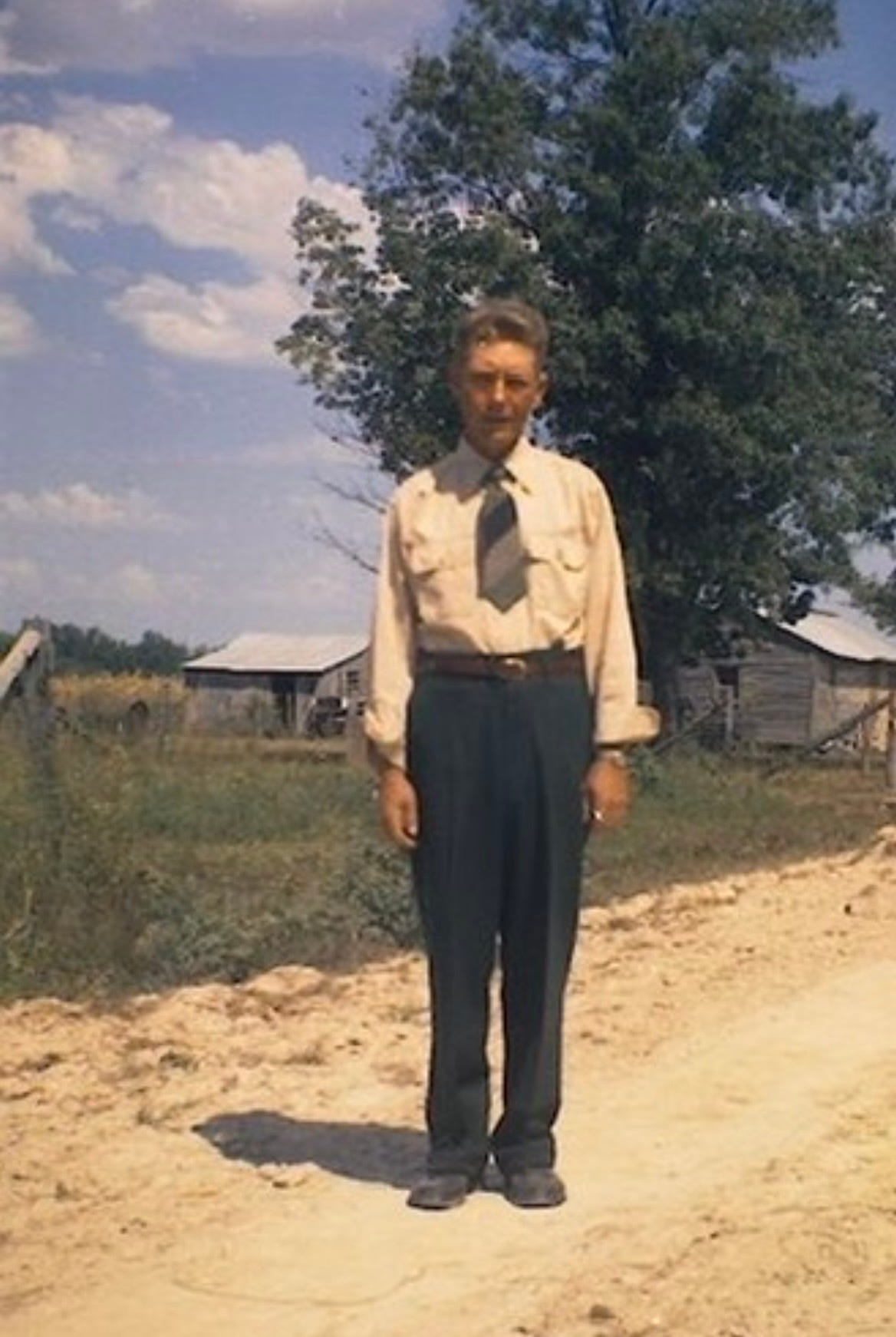
He wore overalls. Rolled his own cigarettes from a can of Prince Albert. Drank his coffee black. Said please and thank you. He was quiet. He believed in hard work and making the most of the time he was given.
He wrote letters to his sisters every day. Sometimes he worked on one letter for a week before sending it off. Those letters were his conversation, his way of staying connected, his way of tending to family the same way he tended the land.
He cared for my great grandmother until the day she died. He never left the house he was born in. From 1910 until his last breath, he had one home. A home where knots in the wood floor were sealed up to keep snakes from finding their way in. A home where quiet and rest could be found.
The furniture was old but useful. The radio had to be cranked to coax out its thin, crackling music. When the radio wouldn’t work, my great uncle would play an old guitar he had. Lanterns and oil lamps lit the evenings. The fireplace warmed hands, cooked meals, and held the room steady at night.
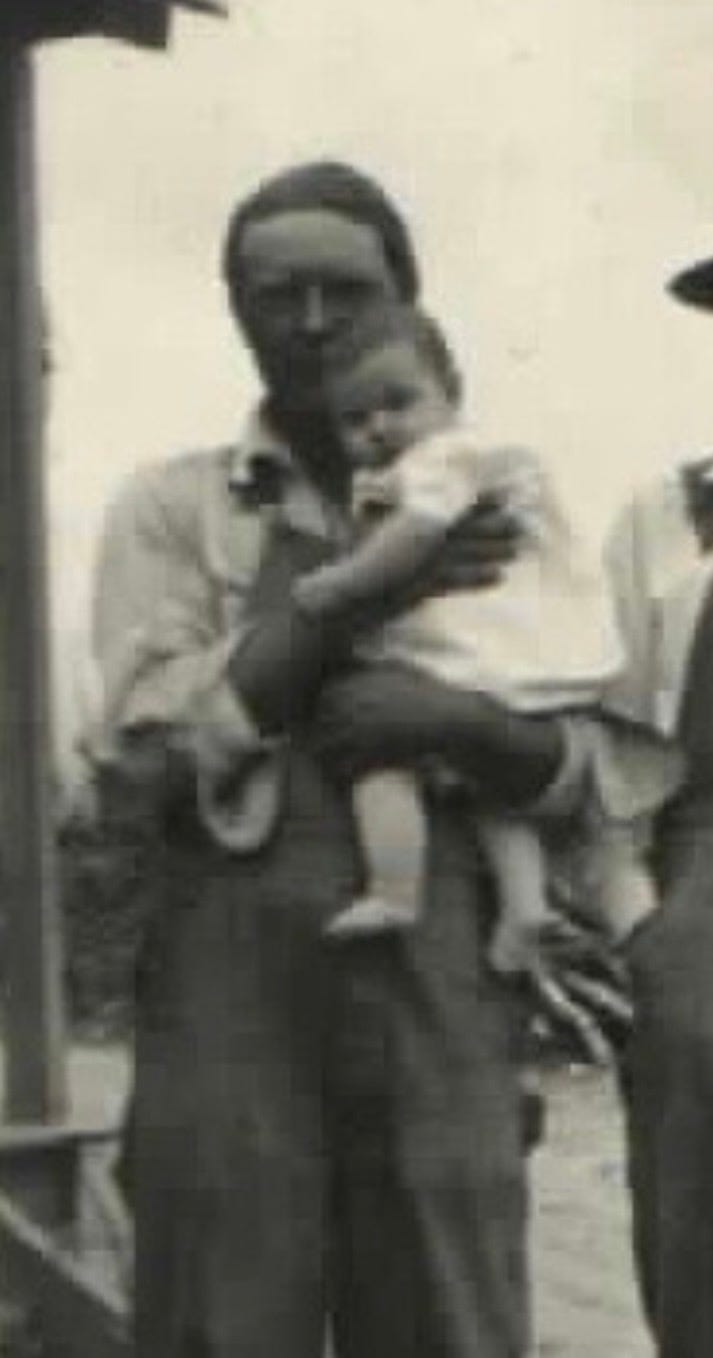
Quilts and blankets were always ready, spread across floors for impromptu guests, for great nieces and nephews to nap under, for whoever needed rest. Quilts that smelled like sun and starch and years of mending.
During the day we ran fence roads and cut across fields, but we always found our way back to the shade tree in the yard. Quilts would be laid out on the ground. Grown-ups gathered there, some in lawn chairs or even the kitchen chairs, some cross-legged on fabric softened by decades. They talked. They laughed. They simply sat together. No phones. No rush. Just presence.
My great uncle did not have much. But what he had was his and he proudly shared with anyone who came to visit. And what he carried, he passed down.
The steadiness. The resourcefulness. The understanding that comfort is not the same thing as peace.
I come from people who could sit in the dark without fear. People who could make heat from wood and water from earth. People who stayed.
He kept life simple.
He kept it moving.
And somewhere in my bones, I still do too.
Author’s Note
This was written in honor of my great uncle and the generations before him who lived quietly, worked steadily, and stayed rooted to the land they were born on. Their lives were not marked by excess, but by care. Care for family. Care for work. Care for doing things the right way, even when no one was watching.
What they passed down was not property or wealth, but a way of being in the world. An understanding that simplicity is not lack. That steadiness is a form of love. That showing up, day after day, is its own inheritance.
This is where I come from.
And it explains more about me than anything else ever could.